Top-Rated Options for the Best Brazilian Wax for Women
What Makes the Best Brazilian Wax for Women?
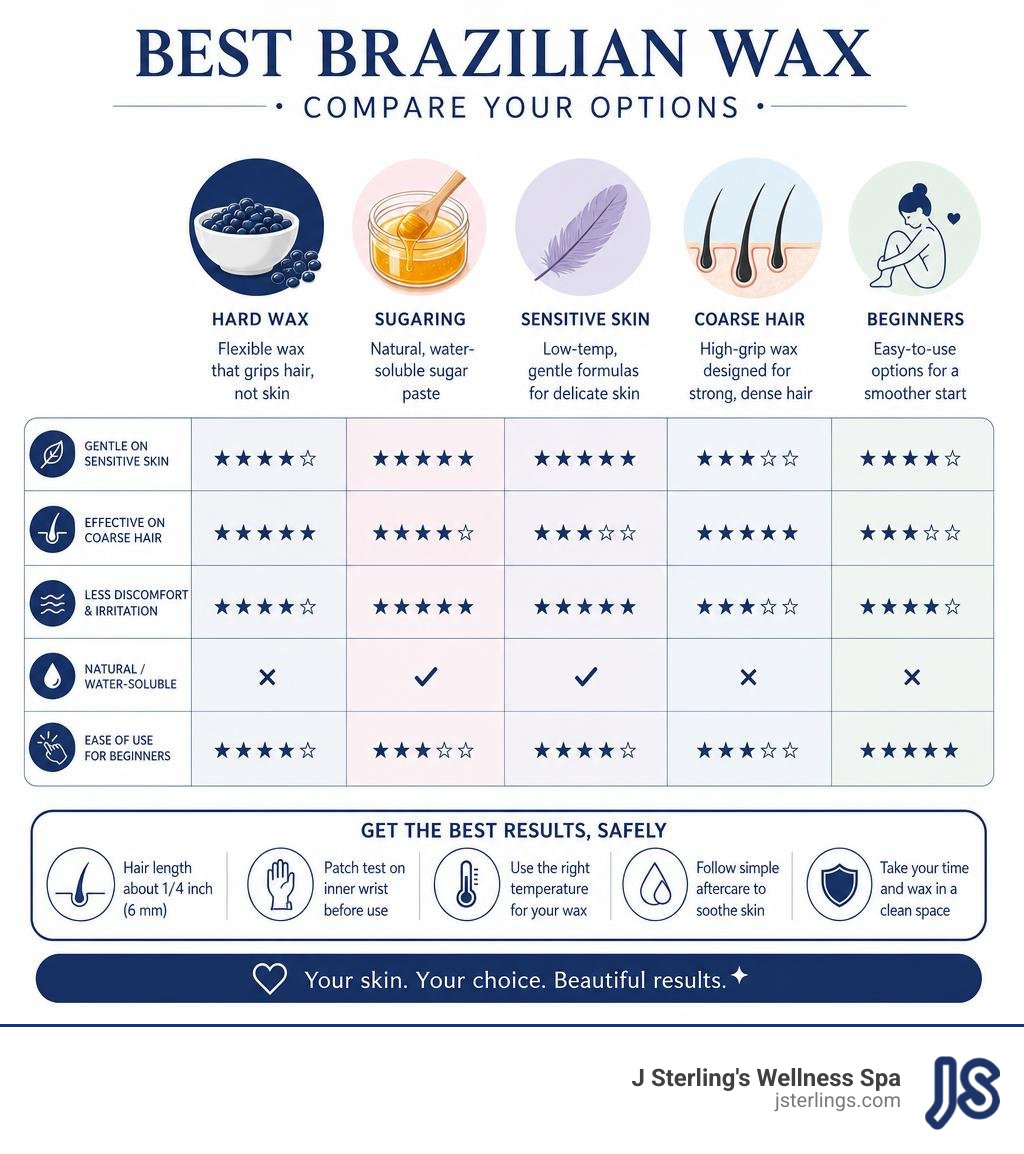
The best brazilian wax for women is usually a flexible hard wax made for sensitive areas, paired with a temperature-controlled warmer. Hard wax grips coarse hair while placing less pull on bare skin, which is why it is generally the better choice for a DIY Brazilian than traditional soft strip wax.
| Quick need | Best option to consider |
|---|---|
| First at-home Brazilian | Complete hard-wax warmer kit with pre- and post-wax care |
| Sensitive or reactive skin | Low-temperature, hypoallergenic, or rosin-free hard wax |
| Coarse, dense hair | High-grip, flexible hard-wax beads |
| Natural, water-soluble option | Sugar paste |
| Quick touch-up, not a full Brazilian | Ready-to-use wax strips |
A good wax matters, but so does safe technique. Hair should be about 1/4 inch long, wax must be tested on the inner wrist before use, and the skin needs simple aftercare to lower the chance of redness, bumps, and ingrown hairs.
I’m Max Thakkar, MSc, MBA, Chief Marketing Officer at J Sterling’s Wellness Spa, where I have spent more than a decade helping shape accessible, high-quality waxing and wellness experiences. In this guide to the best brazilian wax for women, I’ll help you compare the options clearly before we get into formulas, kits, and safe at-home use.
Key Types of the Best Brazilian Wax for Women
Choosing the best brazilian wax for women requires understanding how different formulas interact with intimate skin. The hair removal market hit $15.3 billion globally in 2024 and continues to expand rapidly as women look for efficient, long-lasting options. Whether you are stocking up for at-home care or comparing formulas, the choice usually comes down to hard wax beads, soft strip wax, or natural sugar paste.
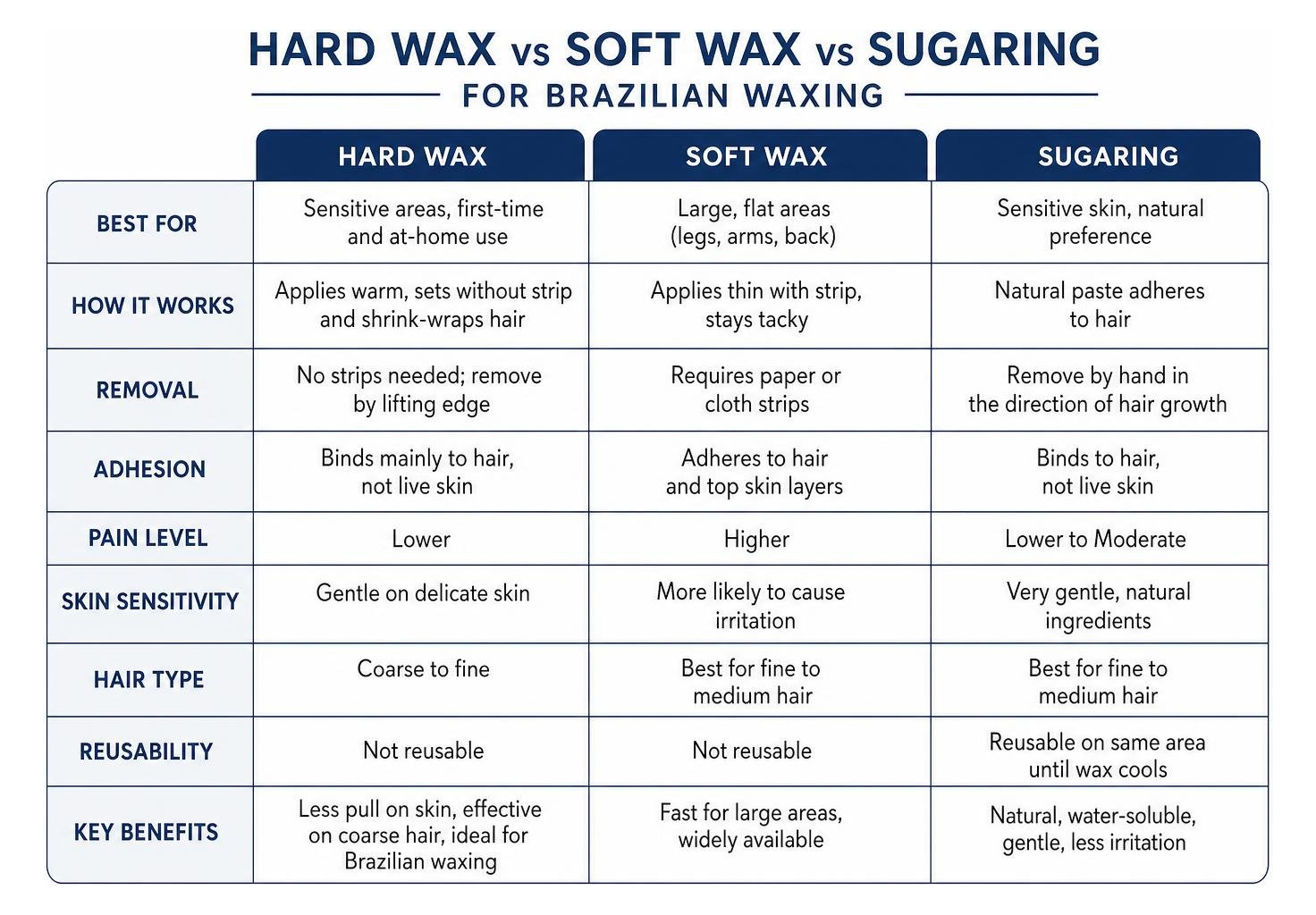
- Hard Wax Beads: Hard wax is the gold standard for delicate bikini areas. Applied warm with a wooden spatula, it shrink-wraps around the hair shaft as it sets into a pliable film. Because hard wax hardens on its own, it is removed without paper or fabric strips, clinging primarily to the hair shaft rather than live skin cells.
- Soft Strip Wax: Soft wax is applied thinly and pulled off using paper or cloth strips. While excellent for large, flat surfaces like legs or arms, soft wax adheres strongly to top skin layers. On delicate pubic contours, this increased adhesion can cause skin lifting, bruising, and higher pain levels.
- Natural Sugar Paste: Made from a natural blend of sugar, water, and lemon juice, sugaring paste is a water-soluble alternative. It adheres to hair rather than skin, making it gentle for sensitive clients who react poorly to traditional waxes.
- Rosin-Free & Synthetic Formulas: For individuals prone to contact allergies, advanced rosin-free hard waxes offer low melting points and extreme flexibility, preventing the wax from snapping during removal.
| Wax Category | Primary Formula Base | Application Method | Strip Requirement | Ideal Body Zone | Relative Discomfort |
|---|---|---|---|---|---|
| Hard Wax | Beeswax, resin, or synthetic polymers | Thick layer with direction of hair growth | Stripless (peeled off directly) | Bikini, Brazilian, underarms, face | Low to Moderate |
| Soft Wax | Pine rosin or honey-based resin | Thin layer spread over skin | Requires paper or fabric strips | Arms, legs, back | Moderate to High |
| Sugaring Paste | Sugar, water, and lemon juice | Molded against hair growth, flicked with growth | Stripless (hand technique) | Full body, bikini, intimate zones | Low |
Comparing Hard Wax vs Soft Wax for Bikini Lines
Understanding the mechanical differences between hard and soft wax is vital when caring for sensitive areas. Hard wax formulas feature unique polymer elasticity, allowing the material to flex along tight intimate contours without cracking or snapping midway through a pull.
As hard wax cools over 10 to 15 seconds, it encapsulates coarse hair roots. Because it does not bond tightly to live epidermal cells, skin adhesion protection is maximized, significantly lowering pain and preventing raw, torn skin.
For complete at-home setups or professional-style sessions, products like the GiGi Brazilian Hair Removal Waxing Kit or the Gigi – Brazilian Waxing Kit, Non-strip Formula | Ulta Beauty provide specialized non-strip formulas designed specifically to tackle coarse, stubborn bikini hair without paper strips.
Pros and Cons of Sugaring vs Hard Wax
Sugaring has earned high praise as an alternative intimate hair removal method. The paste is applied at body temperature, eliminating any risk of thermal burns.
Unlike hard wax—which is smoothed on with hair growth and pulled in the opposite direction—sugaring paste is molded against the direction of hair growth and flicked with the natural direction of growth. This reduces hair follicle breakage and minimizes subsequent ingrown hairs.
- Pros of Sugaring: 100% natural lemon juice sugar blends, water-soluble for easy cleanup with plain water, minimal skin irritation, ideal for reactive skin types.
- Cons of Sugaring: Requires significant practice to master the flicking technique; paste can become soft or sticky in warm, humid bathrooms.
- Pros of Hard Wax: Fast, easy to learn for beginners, stays stable in warmer room temperatures, grips short and coarse hair with precision.
- Cons of Hard Wax: Requires an electric wax warmer and oil-based cleansers for cleanup.
To learn more about foundational waxing techniques and choices, explore our comprehensive guide to Waxing 101.
How to Choose Wax by Hair and Skin Type
Selecting the best brazilian wax for women relies on evaluating your personal hair density and skin sensitivity. The pubic area features dense, coarse hair that grows in multi-directional patterns over delicate skin curves.
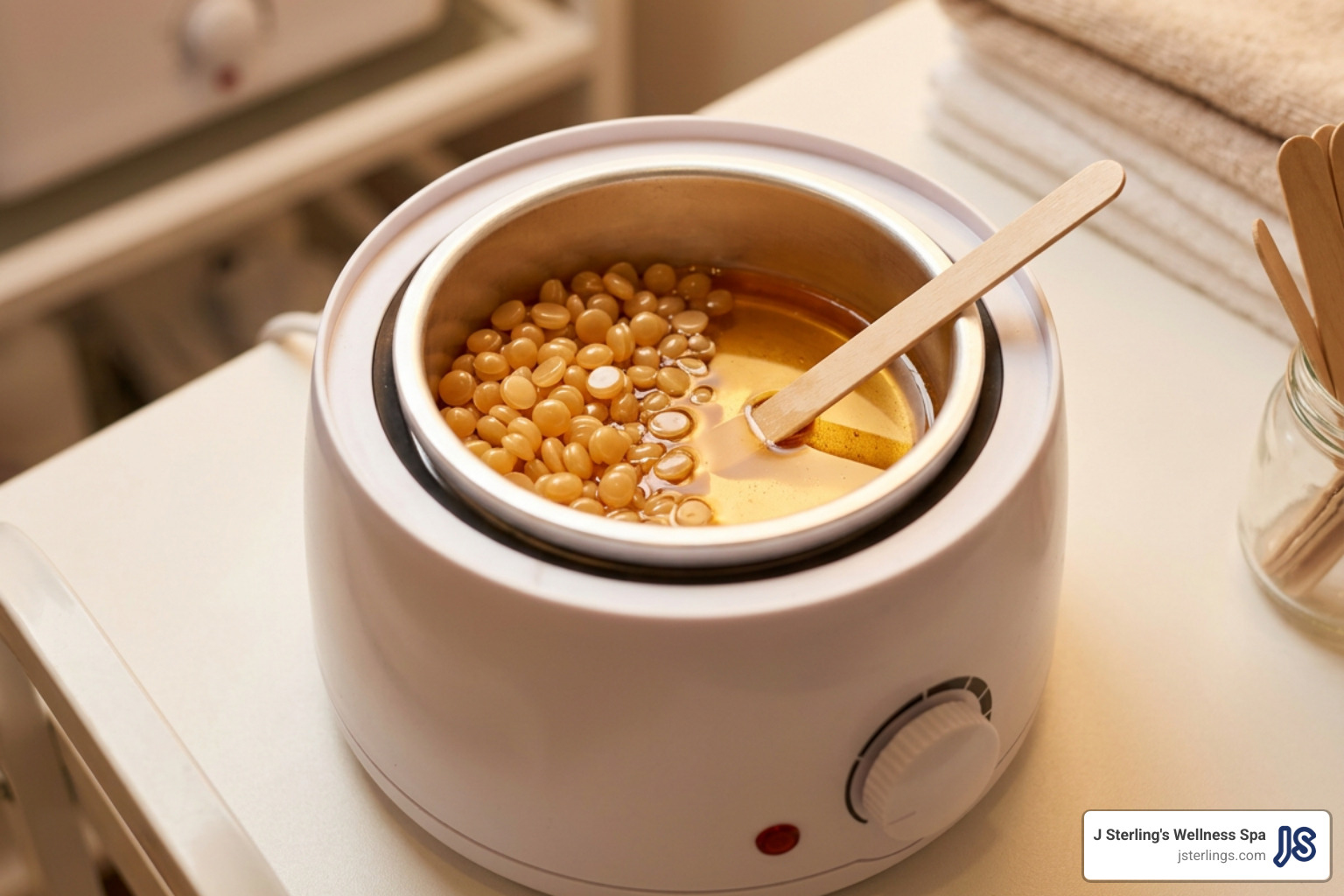
When selecting a kit or formula, ensure your electric wax warmer maintains precise digital temperature control. Warmer pots provide consistent heat, whereas heating wax in a microwave creates dangerous hot spots that can cause severe skin burns.
Choosing the Best Brazilian Wax for Women with Sensitive Skin
If your skin turns bright red or develops bumps easily, prioritize hypoallergenic, rosin-free hard waxes. High-grade formulas blend soothing botanicals like calendula, sweet almond oil, or chamomile extracts to calm the epidermis during application.
Low-melting-point waxes melt at lower operating temperatures, preserving the skin barrier and preventing heat redness. For comprehensive advice on protecting delicate skin barriers, review our guide on Sensitive Skin Care Guide.
How to Pick the Best Brazilian Wax for Women with Coarse Hair
Coarse pubic hair requires high-grip wax beads loaded with flexible synthetic polymers. Standard soft wax often snaps thick hair shafts at skin level rather than uprooting them, leading to rapid regrowth and stubble within days.
High-performance formulas like Platinum Stripless Brazilian Wax – Honeybee Wax incorporate liposoluble ingredients, beeswax, and resins that wrap around thick follicles for clean removal from the root.
Step-by-Step Prep and Technique for DIY Brazilian Waxing
Executing a smooth, safe DIY Brazilian wax requires careful pre-wax skin prep, proper hair length, and accurate technique to avoid severe skin lifting or excessive pain.
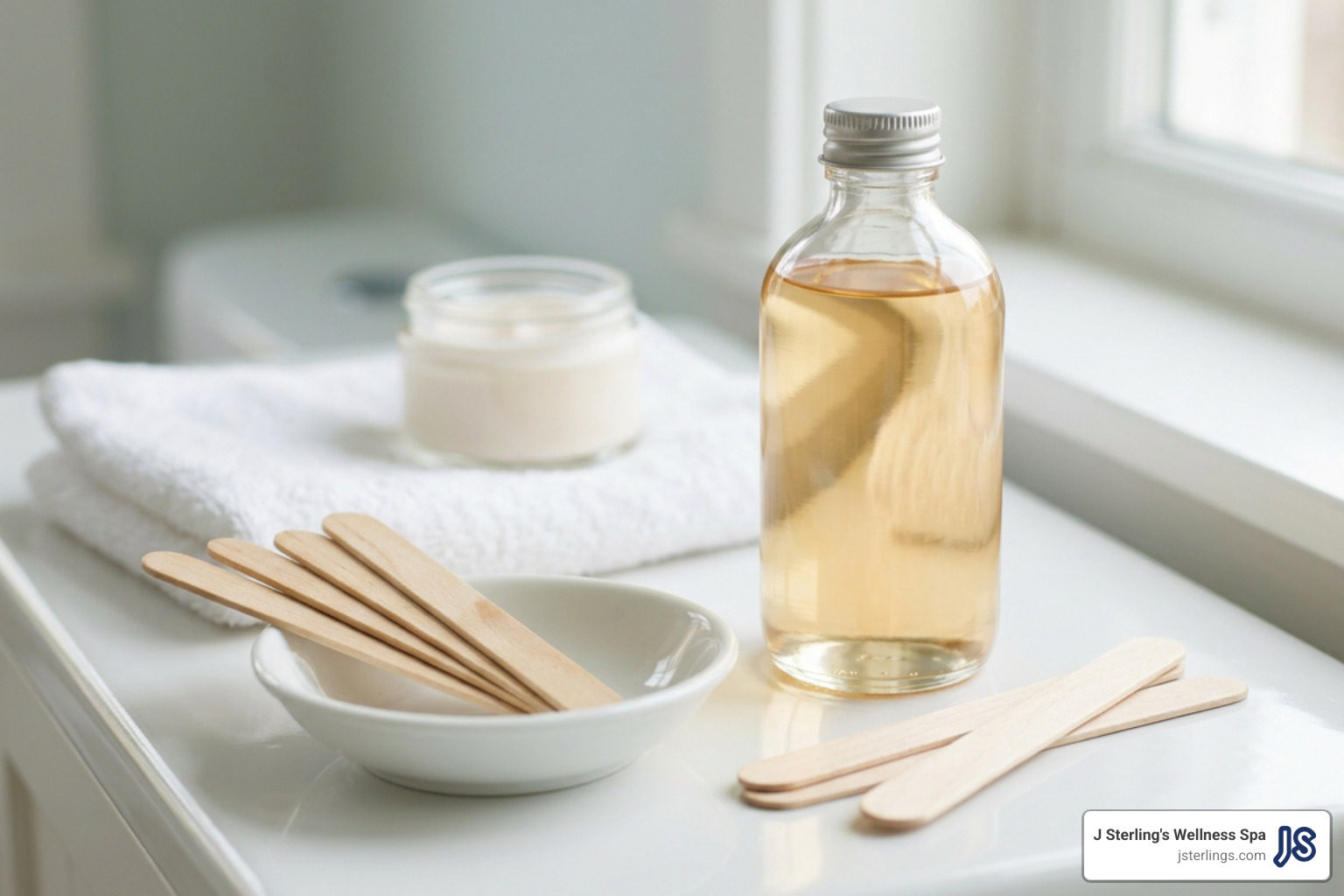
Skin Prep, Hair Length, and Essential Accessories
To ensure optimal wax grip, hair must be at least 1/4 inch long—roughly the length of a grain of rice. If hair is shorter than 1/4 inch, wax cannot grip the shaft; if hair is significantly longer than 1/2 inch, hair removal becomes unnecessarily painful and causes hair breakage.

- Trim Hair: Use an electric bikini trimmer to trim pubic hair down to roughly 1/4 inch.
- Cleanse and Dry: Wash thoroughly with gentle soap and warm water to clear surface sweat and body oils.
- Apply Pre-Epilation Oil or Powder: Lightly dab a drop of pre-epilation oil or a dust of moisture-absorbing cornstarch across the area. Oil acts as a protective barrier between the skin and wax, while powder absorbs excess moisture in humid environments.
- Gather Accessories: Set up a digital wax warmer, wooden spatulas (large for main sections, small for delicate edges), pre-wax oil, and post-wax soothing gel.
For more details on essential tools, check out our Waxing 101 Essentials Guide.
Application, Removal Technique, and Pain Management
Mastering application speed and removal angles makes the difference between a comfortable session and a painful experience:
- Wrist Temperature Test: Always test melted wax on the inside of your inner wrist. If you cannot leave it comfortably on your skin for 3 to 5 seconds, it is too hot for intimate application.
- Consistency Check: Wax should reach a thick, caramel-like consistency. If it runs like water, it is overheated; if it is clumpy, it needs more warm-up time.
- Apply with Pressure: Spreading wax in 1-inch wide by 3-inch long strips in the direction of hair growth. Press firmly with the applicator stick so the wax wraps around the follicle base.
- Create a Pull Tab: Leave a thicker lip of wax at the non-hairy edge so you have a firm grip when pulling.
- Keep Skin Taut: Use your non-dominant hand to pull the surrounding skin completely tight and flat.
- Pull Parallel: Once the wax has set (roughly 10-15 seconds, feeling firm and non-tacky), flick the pull tab up, hold skin taut, and pull quickly parallel to the skin in the opposite direction of hair growth. Never pull upward, as pulling away from the body causes skin bruising and tearing.
- Apply Instant Pressure: Press your palm or fingers firmly against the freshly waxed skin for 3 to 5 seconds immediately after the pull to soothe nerve endings. Applying a cold compress or wrapped ice pack after finishing also reduces skin heat and redness.
Post-Wax Aftercare, Cleanup, and Ingrown Hair Prevention
Proper aftercare protects open hair follicles from bacteria and stops ingrown hairs before they start.
Cleaning Wax Residue and Soothing Irritated Skin
Hard wax is oil-soluble, meaning plain water or alcohol-based soaps will not dissolve leftover sticky patches and will sting freshly waxed skin.
- Clean Residue with Oils: Apply post-wax soothing oils or household natural oils like coconut oil or olive oil to a cotton pad. Gently wipe over residual wax pieces; the oil breaks down the wax bonds smoothly.
- Soothe and Hydrate: Apply pure aloe vera gel or a dedicated post-wax cooling lotion containing tea tree or chamomile. Avoid perfumed body lotions, alcohol-based cleansers, or harsh active chemicals for at least 24 to 48 hours.
- Wear Loose Clothing: Put on breathable, loose cotton underwear and relaxed clothing immediately after waxing to avoid friction irritation.
Preventing Ingrown Hairs and Long-Term Maintenance
Ingrown hairs form when dead skin cells clog follicle openings, trapping new hair growth beneath the surface.
- Exfoliation Timeline: Wait 3 full days post-wax before exfoliating. Starting on day 3, use a gentle exfoliation mitt or mild chemical exfoliant (like lactic or salicylic acid) 2 to 3 times per week.
- Avoid Heat and Sweat: Refrain from heavy gym workouts, hot tubs, saunas, steam rooms, and direct sunlight for 24 to 48 hours following your session.
- Regrowth Maintenance: At-home waxing results last between 1 to 3 weeks for beginners (as multi-stage hair growth evens out) and extend to 4 to 6 weeks for experienced users who consistently lift hair clean from the root.
To integrate proper care into your regular skincare regimen, read our expert insights on Professional Skincare Routine Tips.
Frequently Asked Questions About Brazilian Waxing
How long does hair need to be for an effective Brazilian wax?
Hair must be at least 1/4 inch long—approximately the size of a grain of rice. If hair is shorter, hard wax cannot create a firm grip around the hair shaft, leading to missed hairs and patchy results. If pubic hair has grown longer than 1/2 inch, trim it down gently with an electric trimmer before applying wax to minimize pulling discomfort.
How do I choose between a wax warmer kit and a microwave wax kit?
A dedicated electric wax warmer kit with digital temperature controls is far superior and safer than microwave wax kits. Microwave heating creates uneven hot spots within the container, where the outer edges overheat while the center remains solid, raising the risk of severe skin burns. Electric warmers maintain a consistent, safe working temperature throughout your entire waxing session.
What are the most common mistakes beginners make during home waxing?
The most frequent beginner mistakes include:
- Attempting to wax hair that is too short (under 1/4 inch).
- Skipping pre-wax preparation, such as applying pre-epilation oil or drying moisture.
- Pulling wax upward away from the body instead of holding skin taut and pulling parallel across the skin surface.
- Hesitating mid-pull rather than stripping the wax off in one swift motion.
- Failing to test wax temperature on the inner wrist prior to application.
Conclusion
Finding the best brazilian wax for women comes down to choosing formulas that prioritize flexibility, low melting temperatures, and skin safety. While at-home hard wax warmer kits offer a budget-friendly DIY option—providing 25 to 30 sessions per bag of hard wax beads compared to recurring $60-$100 salon visits—achieving flawless, painless results at home requires practice, physical flexibility, and strict aftercare.
If contorting on bathroom floors or risking skin burns sounds daunting, professional care is always the safest path. At J Sterling’s Wellness Spa, our licensed estheticians deliver top-tier intimate hair removal using premium formulas in a comfortable, luxurious spa setting.
With convenient locations across Orlando—including Altamonte Springs, Clermont, Lake Mary, South Orlando, and Winter Park—we make smooth skin easy and affordable. Whether you are interested in intimate Waxing and Threading or exploring our complete Skincare J Sterlings services, we are here to support your self-care journey.
Ready for effortless, long-lasting smoothness? Book Professional Waxing Services with our expert team today!