Does Laser Hair Removal Hurt? What the Sensation Actually Feels Like
Laser hair removal generally causes only mild, fleeting discomfort rather than sharp or lingering pain, with most clients describing the sensation as a quick snap similar to a tiny rubber band snapping against warm skin. The sensation is instantaneous: you feel a micro-second pulse of heat followed immediately by soothing relief, especially when advanced equipment with contact-cooling sapphire tips or integrated cryogen cooling sprays is used.
This sensory response occurs because concentrated light pulses target the pigment (melanin) inside each hair follicle, converting light into localized thermal heat that disrupts future hair growth. Because nerve endings sit close to hair follicles, they register that brief surge of thermal energy before the cooling mechanism instantly calms the surface of the skin.
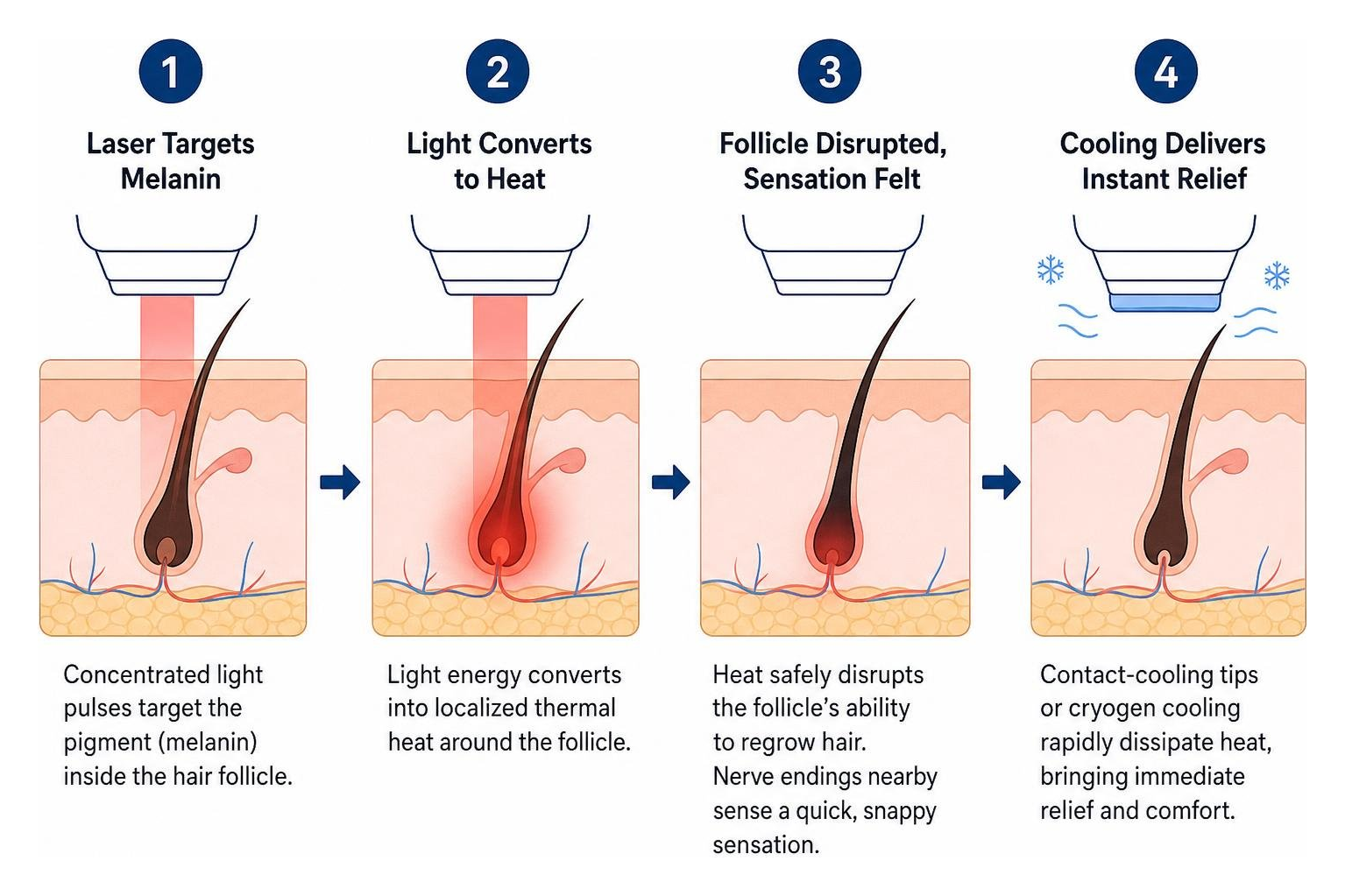
According to a clinical overview of laser hair removal procedures, modern lasers are designed to maximize safety and client comfort by carefully controlling pulse duration and thermal dissipation. While everyone has a unique personal pain threshold, the discomfort during laser hair removal is fleeting. Unlike the lingering ache of an injury or the prolonged burning sensation of a chemical peel, the sensation stops the moment the handpiece moves to the adjacent spot.
Pain Levels Across Different Body Areas
The degree of discomfort you feel depends heavily on anatomy. Areas with thicker skin, higher subcutaneous fat, and lower nerve density are generally very easy to tolerate. Conversely, zones where the skin is delicate, closely bound to bone, or densely packed with nerve endings feel more pronounced.
Face, Upper Lip, and Neck
Facial skin is naturally delicate and rich in sensory receptors. Within the facial zone, pain levels vary significantly:
- Upper Lip: This is typically one of the most sensitive areas on the body. The skin is thin, and cranial nerve endings are highly concentrated here. The sensation can feel sharp, but because the upper lip is a tiny treatment area, the entire pass takes less than two minutes.
- Chin and Jawline: Moderate sensitivity. Clients often feel a quick tap of warmth over the bone, but it remains very tolerable.
- Cheeks and Neck: Generally mild. The cheek tissue is meatier and handles laser pulses with minimal fuss.
Underarms and Bikini Area
Both of these areas feature coarse, deeply rooted hair follicles paired with sensitive, thinner skin:
- Underarms: The axillary region has a cluster of sensitive nerves and coarse hair roots that absorb more thermal energy on your initial visits. However, treatments are exceptionally fast—often under five minutes per side—which is one major reason why laser hair removal for armpits is worth every penny.
- Bikini Line and Brazilian: The pubic area contains sensitive tissue and dense hair growth. The outer bikini line is quite manageable, while deeper intimate contours feel sharper. Fortunately, the intensity drops with every subsequent session as the hair becomes finer and sparser.
Legs, Arms, Back, and Stomach
Larger body zones offer varying degrees of comfort depending on bone proximity and follicle depth:
- Lower Legs: The fleshy calves are relatively comfortable, whereas pulses over the shin bone can produce a mild, vibrating tap.
- Thighs: The outer thighs are easy to treat, while the inner thighs feature softer, more reactive skin that requires steady, calibrated passes.
- Forearms and Upper Arms: Most clients report low to mild sensations here, as arm hair is generally finer.
- Back and Chest: Because male back hair can be dense and deeply anchored, the upper back and shoulders may register moderate discomfort.
- Stomach: The abdominal wall features thicker skin and moderate fat cushioning, making it one of the least painful areas to treat.
Areas Where Laser Should Not Be Performed
Safety is the absolute priority in professional aesthetic care. Certain zones must never be treated with cosmetic lasers due to severe health risks or extreme sensitivity:
- Eyebrow Shaping and the Orbital Eye Socket: Lasers should never be applied inside the orbital rim surrounding the eyes due to the severe risk of permanent optical and retinal damage.
- Inside the Nostrils (Nasal Cavity): Mucous membranes inside the nose cannot safely tolerate laser pulses.
- Inner Ear Canal: The delicate structures of the auditory canal must be strictly avoided.
- Direct Mucous Membranes: Laser light is intended for external skin surfaces and should not be directed onto moist internal mucous tissues.
Laser Hair Removal vs. Other Methods: Pain and Results Comparison
To put laser hair removal discomfort into perspective, it helps to evaluate how it compares to standard grooming routines in terms of physical sensation, frequency of pain, and long-term results.
| Hair Removal Method | Sensation / Pain Level | Longevity of Results | In-Grown Hair Risk | Frequency of Discomfort |
|---|---|---|---|---|
| Laser Hair Removal | Mild to moderate quick snap; decreases each session | Long-term permanent reduction (years) | Extremely low (eliminates ingrowns) | 4 to 8 sessions total, spaced weeks apart |
| Waxing | Sharp, tearing sting across a large surface | 3 to 5 weeks | Moderate to high | High (repeated every month indefinitely) |
| Electrolysis | Localized stinging/heat per individual follicle | Permanent | Low | High (requires hundreds of individual follicle zaps) |
| Shaving | Painless initially; itching, cuts, and razor burn later | 1 to 3 days | Very high | Frequent ongoing skin irritation |
Does Laser Hair Removal Hurt Compared to Waxing?
Many people accustomed to regular waxing find laser treatments significantly easier to manage. Waxing involves applying warm resin and forcefully ripping dozens of hair roots out of the dermis all at once. Anyone familiar with Brazilian wax procedure pain knows that the stinging, tearing sensation can leave the skin tender and inflamed for hours.
By contrast, laser pulses deliver targeted light into individual follicles without mechanically pulling or tearing the skin surface. Most importantly, while waxing requires enduring that same sharp pain every month for the rest of your life, laser discomfort declines noticeably with each session as follicles become disabled and hair regrows thinner and softer.
Shaving vs. Laser Discomfort
Shaving appears painless in the moment, but the aftereffects can cause chronic discomfort:
- Razor Burn: Friction from blades often leads to redness, micro-abrasions, and burning sensations.
- Folliculitis and Ingrown Hairs: When cut at an angle, coarse curly hair frequently curls back into the skin, leading to painful pustules and irritation.
- Daily Maintenance: The cycle of scraping skin daily or every other day creates persistent epidermal stress.
Laser hair removal eliminates the friction of blades altogether and permanently resolves recurring ingrown hairs.
How to Minimize Discomfort and Manage Side Effects
Preparing your body properly before your appointment makes a noticeable difference in your overall comfort level.
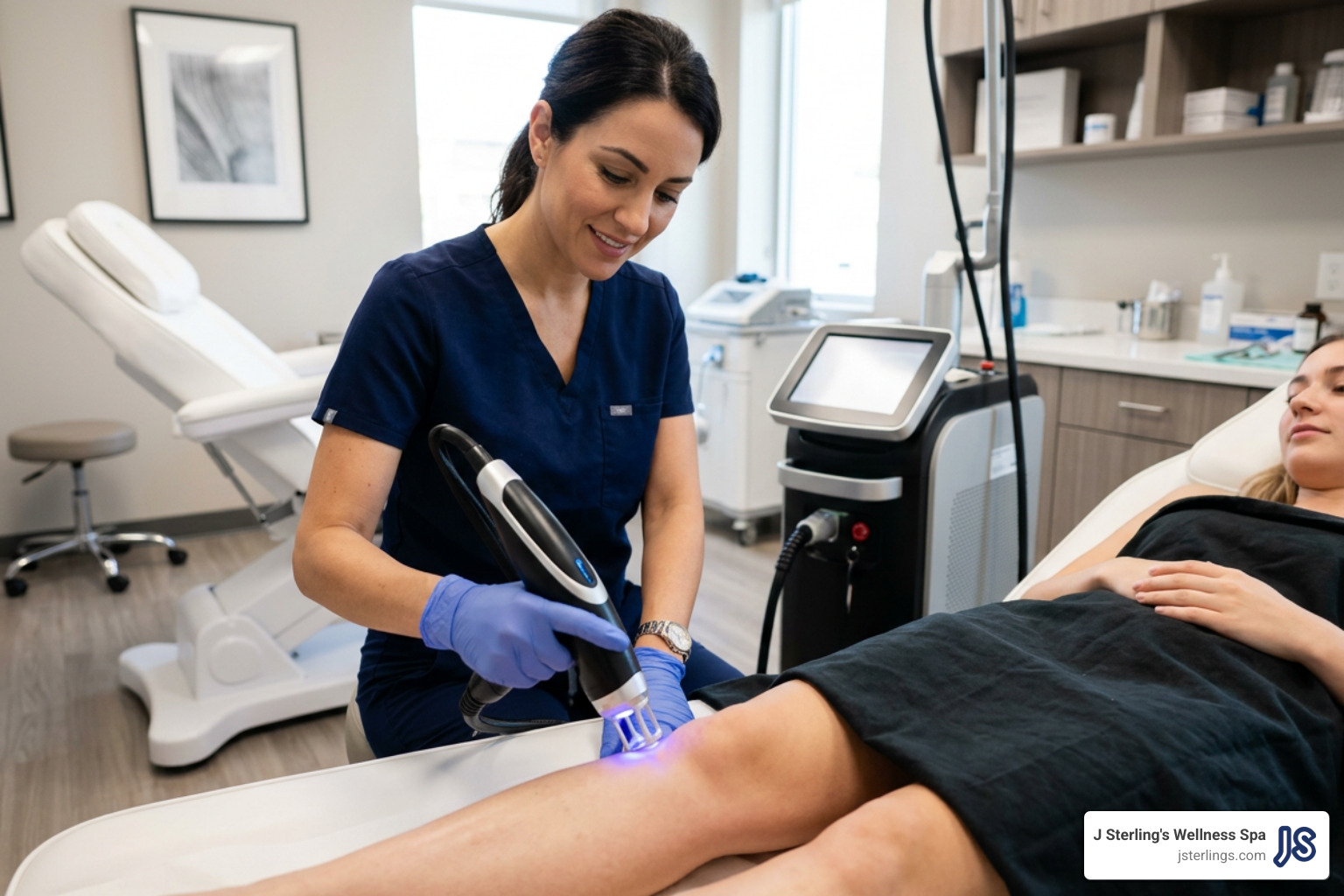
Here are practical steps you can take before your session to ensure a smooth, comfortable experience:
- Shave 24 Hours in Advance: Always cleanly shave the treatment area the day or night before your appointment. If hair sits above the skin surface, the laser light will heat the external hair shaft, causing unnecessary surface burning. Shaving ensures the thermal energy travels straight down to the root beneath the skin.
- Avoid Sun Exposure and Tanning Beds: Tanned skin has elevated melanin levels in the epidermis, which increases the likelihood of discomfort and blistering. Stay out of direct sunlight and use sunscreen for at least 2 to 4 weeks prior to treatment.
- Skip the Pre-Appointment Caffeine: Stimulants like coffee, energy drinks, and pre-workout supplements elevate central nervous system alertness, making you more reactive to tactile sensations. Opt for water instead.
- Stay Hydrated: Well-hydrated skin handles thermal energy more efficiently and recovers faster.
- Wear Loose, Breathable Clothing: Arrive in loose cotton garments so treated areas are not subjected to tight friction immediately after your session.
Does Laser Hair Removal Hurt Less with Modern Cooling Technologies?
Modern aesthetic technology has transformed the client experience. Older generations of lasers relied strictly on external ice packs, but modern clinical systems incorporate advanced cooling mechanisms:
- Dynamic Cooling Devices (DCD): These spray a calibrated burst of cryogen gas onto the skin milliseconds before the laser fires, numbing the epidermal surface before heat is delivered.
- Sapphire Contact Cooling: The tip of the handpiece remains continuously chilled (often between 0°C and 4°C), soothing the skin on contact while the pulse passes safely beneath into the follicle.
- Advanced Wavelength Matching: Using Alexandrite lasers (755 nm) for lighter skin types or Nd:YAG lasers (1064 nm) for deeper complexions ensures light targets deep follicle melanin rather than epidermal pigment, substantially lowering surface heat.
Managing Common Side Effects and Aftercare
After your session, you may experience minor, short-lived side effects that resemble a mild sunburn. These are healthy indicators that the hair follicles received adequate thermal disruption:
- Perifollicular Erythema and Edema: Mild redness and tiny, raised bumps around hair follicles, which typically dissipate within 2 to 24 hours.
- Soothing with Pure Aloe Vera: Apply cold, preservative-free aloe vera gel to cool the skin and provide immediate relief.
- Cold Compresses: Placing a clean, chilled washcloth over the treated area eases any lingering warmth.
- Avoid Hot Showers, Saunas, and Vigorous Workouts: Keep the area cool and avoid excess sweat, steam rooms, or hot tubs for 24 to 48 hours post-treatment.
- Daily Broad-Spectrum Sunscreen: Protect exposed treatment zones with an SPF 30+ physical sunscreen to prevent hyperpigmentation while your skin recovers.
Frequently Asked Questions About Laser Hair Removal Discomfort
How many sessions does it take before treatments hurt less?
Most clients achieve optimal hair reduction within 4 to 8 sessions, scheduled 4 to 8 weeks apart depending on the body area. You will notice that the very first session typically carries the most noticeable sensation because hair follicles are at their thickest and densest. By sessions two and three, a significant portion of active follicles have been disabled, and the remaining hair emerges finer and lighter in pigment. With less melanin density to absorb heat, subsequent sessions feel progressively easier and faster.
Can you use numbing cream before laser hair removal?
Yes, topical numbing creams containing lidocaine can be used, but they should only be applied under professional guidance. The FDA advises applying numbing agents in thin layers strictly to small, highly sensitive treatment zones (such as the upper lip or bikini line) shortly before your session. Applying large quantities of numbing cream over wide body areas (like full legs or the back) is unnecessary and carries systemic absorption risks. In most cases, the laser’s built-in cooling system provides more than enough comfort on its own.
Does skin tone or hair color affect how much laser hurts?
Yes, pigment distribution plays an important role in laser physics:
- Hair Color: Dark, coarse hair absorbs laser energy very efficiently. While this produces a clearer snap during initial sessions, it also yields the fastest reduction. Fine or lighter brown hair absorbs less thermal energy. (White, gray, red, and very light blonde hairs lack sufficient melanin for standard laser targeting.)
- Skin Tone: Deeper skin tones contain higher levels of epidermal melanin. When treating darker complexions, experienced providers use specialized Nd:YAG lasers with longer wavelengths (1064 nm). This allows the light to bypass surface skin pigment and deliver its energy directly to the deep hair root, ensuring both safety and comfort without causing surface burns or pigmentation shifts.
Conclusion
While laser hair removal is not completely sensation-free, the brief, snapping feeling is mild, manageable, and far easier to handle than a lifetime of painful waxing or chronic razor burn. Thanks to integrated cooling technology, specialized wavelengths, and experienced technicians, your sessions are structured to keep you relaxed from start to finish.
Investing in a series of treatments delivers long-term smoothness, permanently frees you from ingrown hairs, and eliminates daily shaving hassles. If you are ready to experience high-quality, budget-friendly luxury, our licensed specialists at J Sterling’s Wellness Spa are here to personalize your treatment plan across our six Central Florida locations—including Orlando, Winter Park, Altamonte Springs, Lake Mary, Clermont, St. Cloud, and Waterford Lakes. Book your consultation today and take the first step toward effortless, comfortable smoothness.