Why Clockwise Stomach Massage Is the Usual Direction
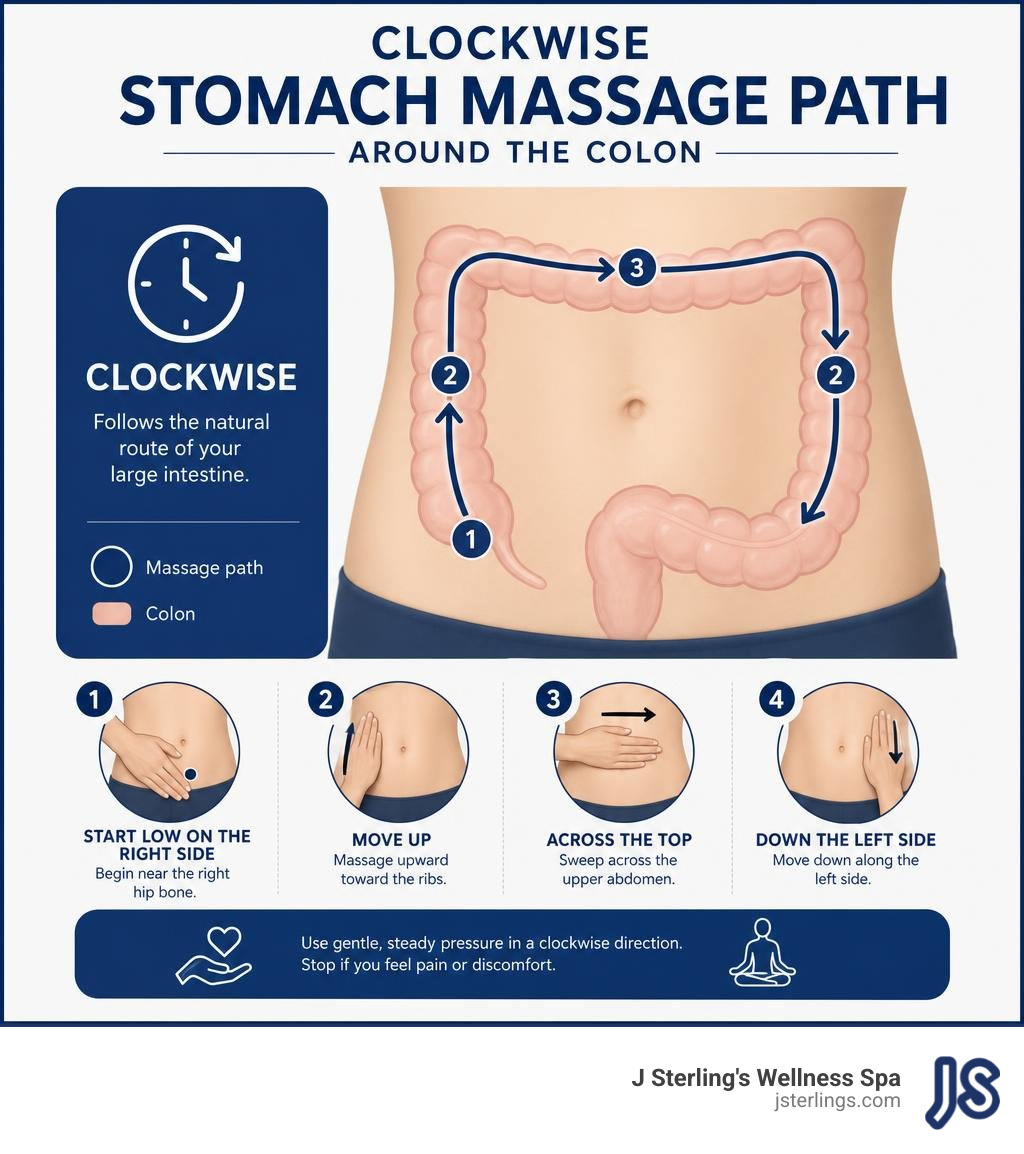
A clockwise stomach massage follows the natural route of your large intestine: start low on the right side of your abdomen, move up toward the ribs, travel across the upper belly, then move down the left side. This direction may gently support the movement of gas and stool, making it a common self-care technique for mild constipation, bloating, and abdominal fullness.
| Quick answer | What to do |
|---|---|
| Best direction for constipation or trapped gas | Massage clockwise |
| Where to begin | Lower right abdomen, near the right hip bone |
| Route to follow | Up the right side, across the upper abdomen, and down the left side |
| Pressure | Gentle to comfortably firm – never painful |
| When to stop | Stop and seek medical advice for severe pain, fever, vomiting, a swollen hard abdomen, or unexplained symptoms |
Direction matters because the colon is not a straight tube. Clockwise strokes, from your perspective while looking down at your abdomen, generally trace its ascending, transverse, and descending sections. Massage is not a cure for ongoing digestive problems, but it can be a calming, low-risk tool when used gently and appropriately.
I’m Max Thakkar, MSc, MBA, Chief Marketing Officer at J Sterling’s Wellness Spa, where I help make high-quality massage and wellness services more accessible for Orlando clients. While clockwise stomach massage is a focused self-care technique rather than a replacement for medical care, my work in the wellness industry has shown how clear guidance, experienced therapists, and safe practices help people feel more confident in their body-care routines.
Why Direction Matters: Clockwise vs. Counterclockwise Stomach Massage
When we explore self-care techniques for digestive health, one question comes up constantly: does the direction of your strokes really make a difference? The short answer is an absolute yes. When you work on your midsection, the direction you guide your hands determines whether you are encouraging your body’s natural digestive pathway or pushing against it.
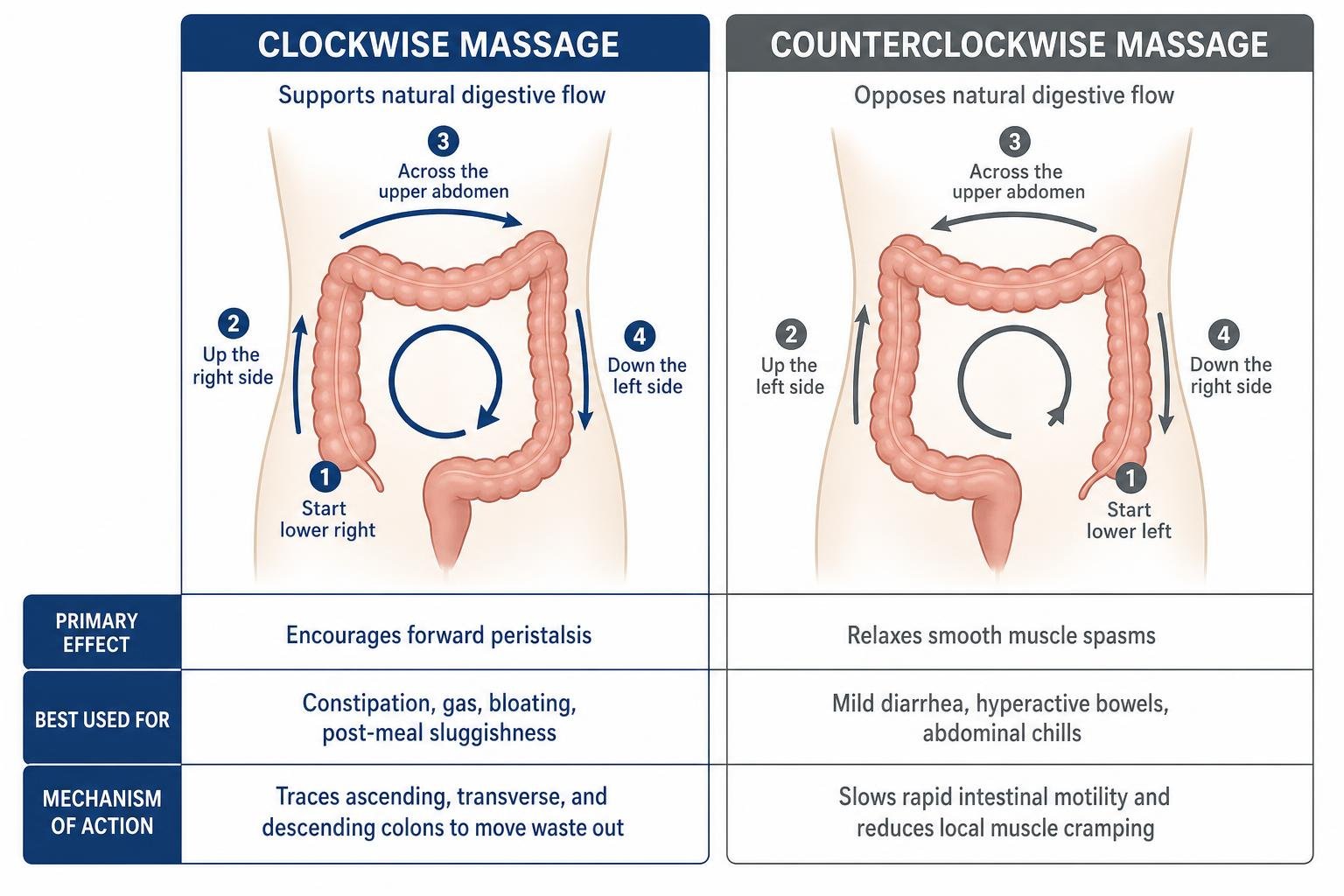
Understanding should stomach massage be done clockwise or counterclockwise? comes down to understanding gastrointestinal mechanics. A clockwise stomach massage aligns directly with the physical arrangement of the human colon. Moving your hands in a clockwise circle—when looking down at your own belly—mirrors the route digested food takes as it travels toward elimination.
Counterclockwise massage moves in the exact opposite direction of natural waste elimination. While counterclockwise strokes can occasionally be used under specific circumstances to help calm overactive bowels or ease diarrhea by slowing down hyperactive muscle spasms, clockwise strokes are the universal gold standard for relieving constipation, trapped gas, and sluggish digestion.
| Massage Direction | Primary Biological Effect | Best Used For | Mechanism of Action |
|---|---|---|---|
| Clockwise | Encourages forward peristalsis | Constipation, gas, bloating, post-meal sluggishness | Traces ascending, transverse, and descending colons to move waste out |
| Counterclockwise | Relaxes smooth muscle spasms | Mild diarrhea, hyperactive bowels, abdominal chills | Slows rapid intestinal motility and reduces local muscle cramping |
The Anatomical Route of the Colon
To appreciate why directional stomach rubbing works, it helps to visualize the inverted “U” shape of your large intestine. Digestive contents enter the colon in the lower right area of your abdomen, near your hip bone. From there, waste must travel upward, across, and down before leaving the body:
- Ascending Colon: Begins at the lower right quadrant near the right hip bone (cecum) and travels vertically up toward the right rib cage.
- Transverse Colon: Crosses horizontally across the upper abdomen, moving underneath the diaphragm from the right side over to the left side.
- Descending Colon: Runs downward along the left side of your belly, traveling from beneath the left rib cage down toward the left hip bone.
- Sigmoid Colon & Rectum: Curves inward from the lower left hip toward the center pelvic region to store and evacuate stool.
When you perform a clockwise stomach massage, your fingers follow this exact road map: lower right $\rightarrow$ upper right $\rightarrow$ upper left $\rightarrow$ lower left. Pushing in any other direction is like trying to drive the wrong way down a one-way street; it can cause discomfort by packing intestinal gas and waste backward.
How Clockwise Stomach Massage Stimulates Intestinal Motility
Beyond simply pushing contents along, gentle abdominal work stimulates peristalsis—the automatic, rhythmic muscle contractions that propel food through your gastrointestinal tract. According to The Gentle Art of Stomach Rubbing: Which Way to Go?, manual pressure activates physical receptors in the gut wall, sending neuromuscular signals that wake up sluggish smooth muscle tissue.
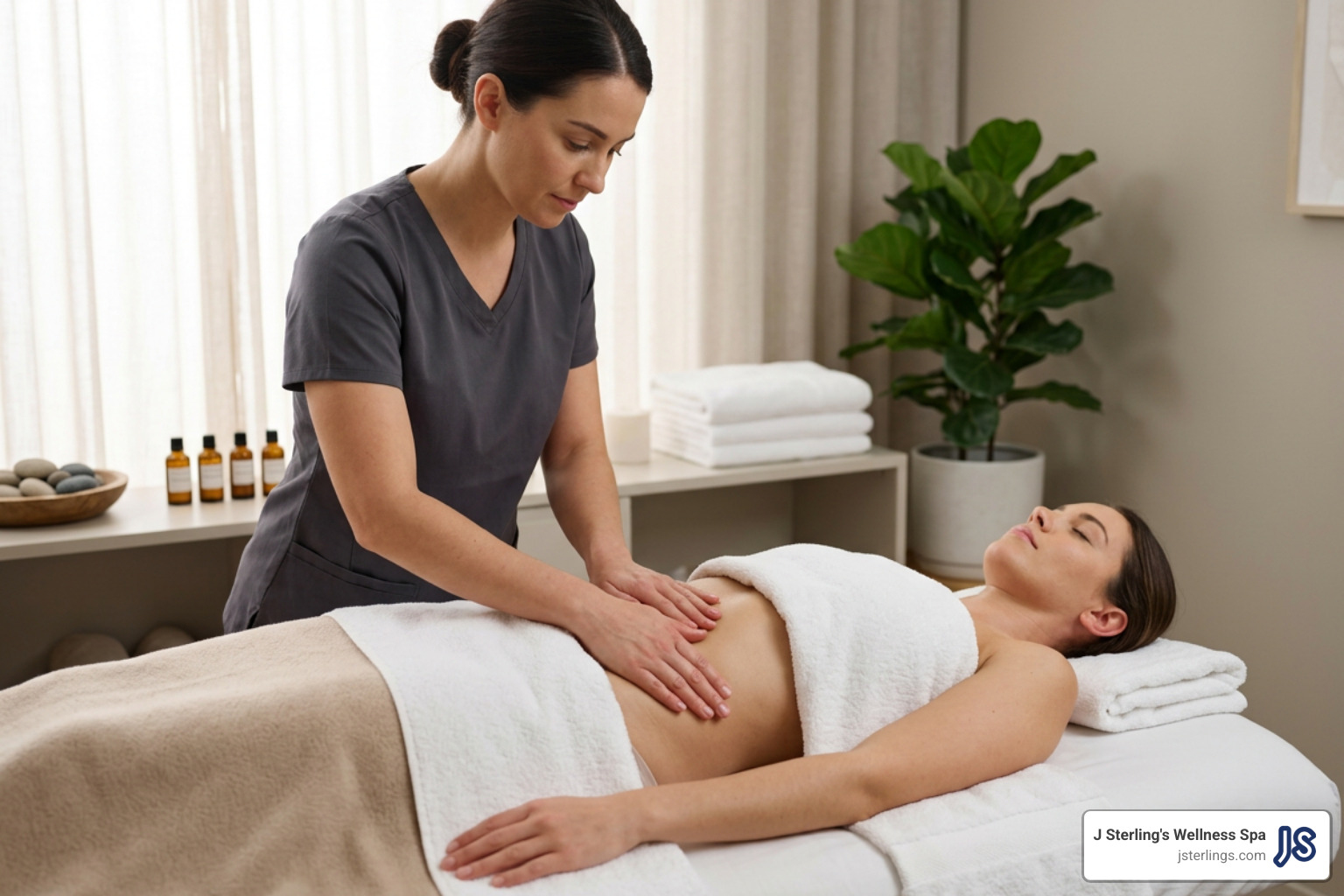
When physical activity levels decline or stress levels rise, intestinal motility slows down, allowing gas and fluid to collect in pocketed bends of the colon. Manual stimulation encourages these natural contractions, helping your digestive tract regain its steady rhythm. At J Sterling’s Wellness Spa, our licensed therapists frequently see how targeted bodywork relaxes tightness throughout the torso, easing strain on both internal organs and surrounding structural muscles.
Health Benefits of Clockwise Stomach Massage
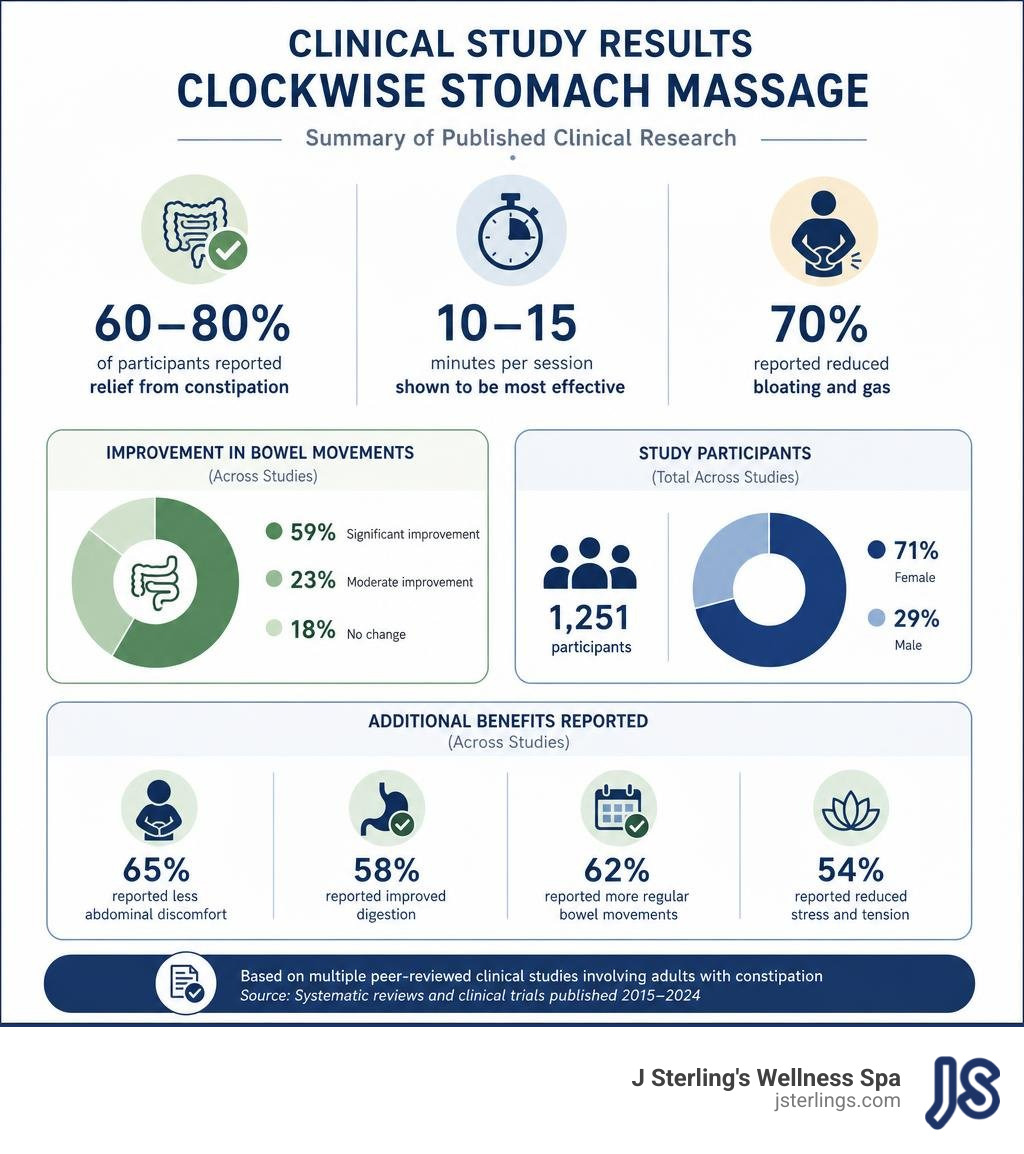
Integrating a brief abdominal massage into your daily wellness routine delivers wide-ranging benefits for your digestive system and overall physical comfort. Clinical studies show that regular abdominal manual therapy can significantly reduce abdominal circumference, minimize fluid retention, and shorten colonic transit time.
Research highlighted in clinical trials demonstrates just how impactful this simple habit can be:
- A 2018 study revealed that a 15-minute abdominal massage performed twice daily for three days significantly reduced abdominal circumference and relieved bloating in hospitalized patients.
- A 2016 study found that abdominal massage reduced constipation symptoms, increased total bowel movement frequency, and decreased the time between bowel movements for post-surgery patients.
- A 2015 study showed that 15 minutes of daily abdominal massage over three days successfully lowered perceived levels of abdominal bloating.
- Long-term clinical research demonstrates that 75% of participants reported noticeably less bloating, more complete bowel evacuation, and an improved appetite after six weeks of daily abdominal massage.
- In a 2018 randomized controlled trial, 85% of participants who learned daily abdominal massage chose to continue the practice on their own long after the formal study ended.
If you suspect your body is carrying unneeded tension, reviewing the 8 Obvious Signs Your Body Needs a Massage can help you identify whether your digestive sluggishness is tied to broader muscular tightness.
Relieving Constipation and Bloating
Trapped intestinal gas and slow-moving stool are two of the most uncomfortable digestive complaints. When stool lingers in the descending colon, gas bubbles become trapped behind it, expanding the abdominal wall and causing sharp pain or tightness.
Applying targeted pressure along the colon sequence manually decompresses these trapped gas pockets. As noted in research on Stomach Massage for Bloating: What the Research Shows and the Gut Release Sequence, gentle stroking breaks up large gas bubbles into smaller, easily passable units while mechanically coaxing stool down toward the sigmoid colon for smooth evacuation.
Additional Digestive Benefits Beyond Bowel Movement
While constipation and gas relief are the primary reasons people turn to clockwise stomach massage, the biological advantages extend far deeper into your overall digestive function:
- Vagus Nerve Activation: The vagus nerve runs directly between the brain and the gut, forming the backbone of the gut-brain axis. Gentle, rhythmic abdominal massage stimulates vagal tone, shifting your nervous system out of “fight-or-flight” mode into the “rest-and-digest” parasympathetic state essential for optimal enzyme secretion.
- Enhanced Abdominal Circulation: Physical strokes increase localized blood supply to the stomach, liver, pancreas, and intestines, enhancing nutrient absorption and waste removal.
- Reduced Visceral Tension: Stress often leads us to unconsciously hold tightness in our abdominal wall. Relaxing these superficial muscles removes external compression on internal digestive organs.
- Indigestion Easing: Massaging the upper stomach area gently encourages proper stomach emptying, relieving that heavy, overfull feeling after eating.
For a comprehensive holistic perspective on combining massage practices, reading an Abdominal Massage (Udara Abhyanga): A Complete Therapeutic Guide – Anantya Healthcare OPC Pvt Ltd details how ancient traditional oil work complements modern gastrointestinal neurophysiology.
Step-by-Step Guide to Clockwise Stomach Massage Technique
Performing a clockwise stomach massage at home is straightforward, safe, and effective when done with proper form. You do not need complex equipment—just your hands, a quiet room, and optional massage oil or lotion to ensure smooth glides across your skin.
To learn more about complementary self-care techniques, explore our detailed guide on How to Massage Your Stomach to Relieve Gas: A Step-by-Step Guide.
Preparing for Your Massage
Preparation sets the stage for optimal relaxation. If your belly muscles are tense or guarding, the massage will not penetrate deeply enough to stimulate intestinal tissue.
- Timing: Wait at least 45 to 60 minutes after a meal. Performing deep belly work on a full stomach can trigger nausea or reflux.
- Positioning: Lie comfortably flat on your back on a supportive bed, yoga mat, or treatment table. Bend your knees slightly and place a pillow beneath them; this relaxes your lower back and instantly softens your abdominal muscles.
- Warmth: Cold hands cause reflexive muscle guarding. Rub your hands together briskly for 30 seconds or rinse them under warm water before starting.
- Lotion or Oil: Apply a small dime-sized amount of warm oil (such as jojoba, fractionated coconut, or sweet almond oil) or lightweight lotion to your palm.
- Diaphragmatic Breathing: Close your eyes and take 4 to 5 deep belly breaths. Inhale deeply through your nose, allowing your stomach to expand, and exhale slowly through your mouth to release physical tension.
The Clockwise Stomach Massage Sequence
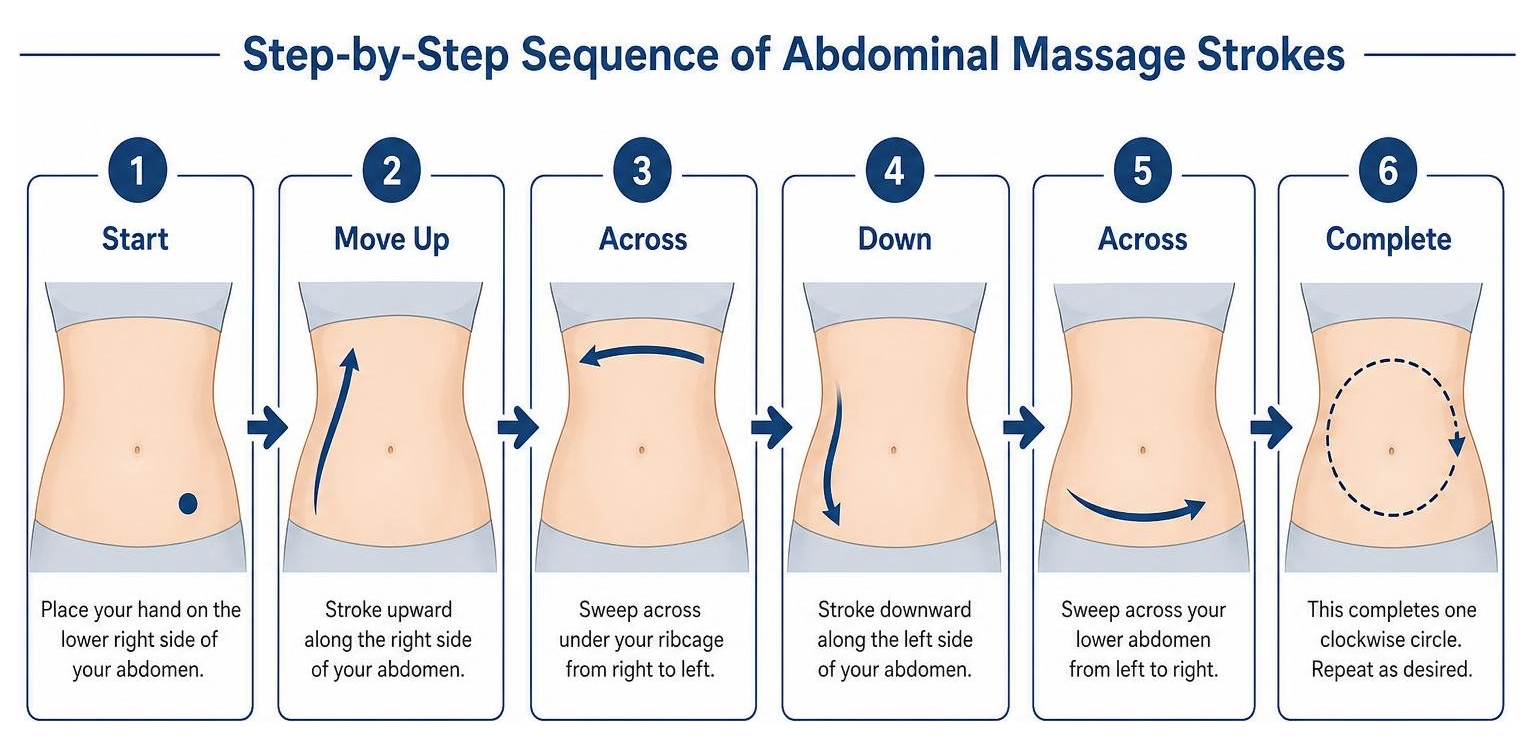
Once relaxed, proceed through this structured 5-step clockwise routine:
- Step 1: The Warm-Up Pass Place both palm surfaces flat on your lower abdomen. Make broad, light circular strokes clockwise around your navel for 1 to 2 minutes. This initial pass warms up local skin tissue and signals your nervous system to relax.
- Step 2: Ascending Colon Sweep (Lower Right to Upper Right) Place the pads of two or three fingers in your lower right abdomen, just inside your hip bone. Apply gentle to moderate pressure and stroke slowly upward to just below your right rib cage. Repeat this upward stroke 10 times.
- Step 3: Transverse Colon Trace (Upper Right to Upper Left) Move your fingers to the area under your right rib cage. Stroke horizontally across your upper belly to the area just below your left rib cage. Repeat this horizontal stroke 10 times.
- Step 4: Descending Colon Glide (Upper Left to Lower Left) Position your fingers under your left rib cage. Stroke downward along the left side of your abdomen toward your left hip bone. Repeat this downward stroke 10 times.
- Step 5: Full Clockwise Circuit & Navel Radius Combine all three segments into one smooth, continuous clockwise loop. Start at the lower right, glide up to the right ribs, across to the left ribs, down to the left hip, and across the lower belly back to the starting point. Repeat 10 to 15 times. Finish by using fingertips to trace small, clockwise circles 2 to 3 inches around your belly button for 1 to 2 minutes to target small intestine digestion.
If you are curious how directional abdominal therapy fits into a broader bodywork routine, check out How to Massage Your Stomach for Optimal Digestion – WHYS.video for quick visual reference tips.
The ILU (I Love You) Massage Technique
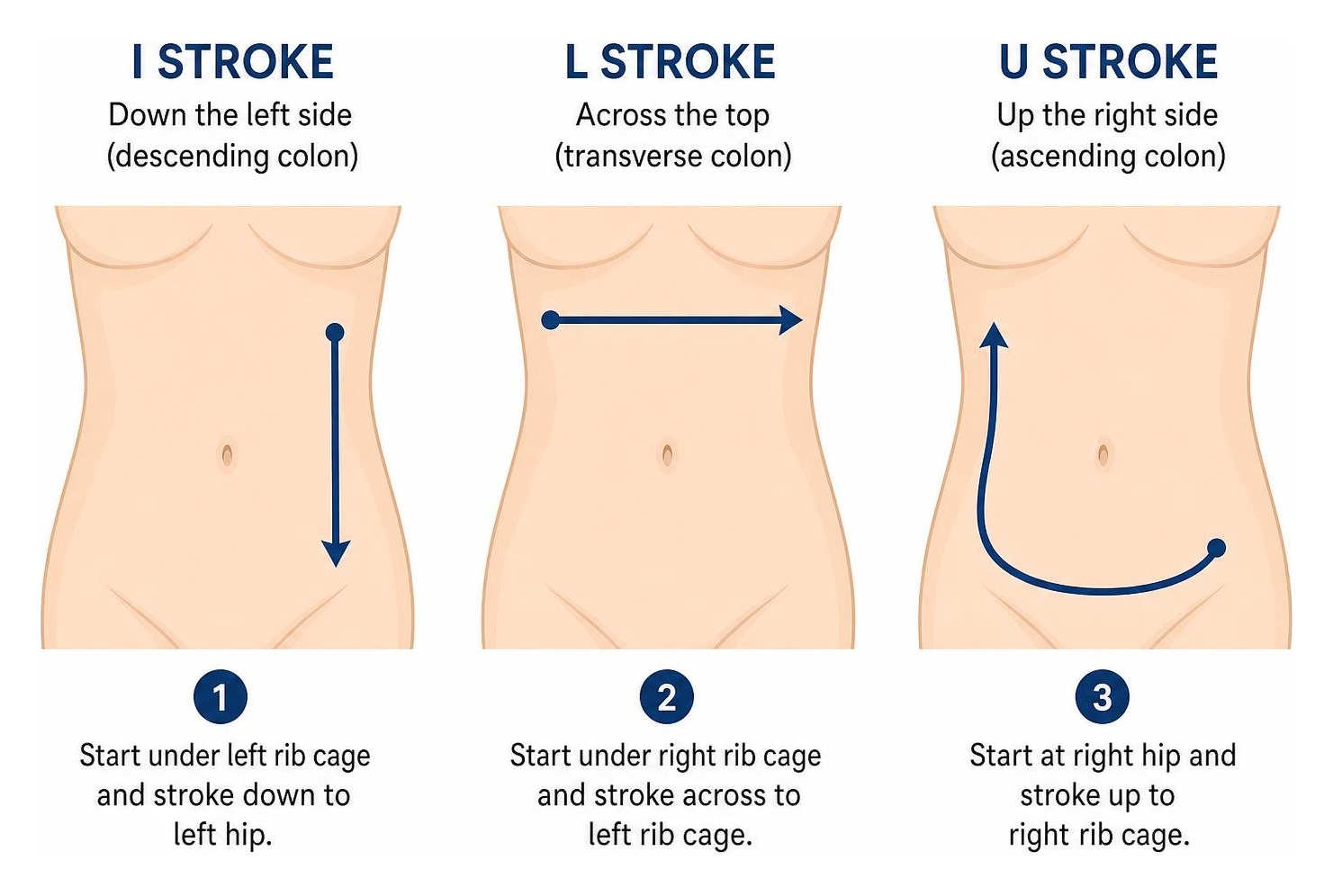
One of the most popular, clinically recognized variations of clockwise stomach massage is the ILU (I Love You) technique. Named after the shapes your hand traces across the belly, this sequence is widely used by physical therapists, pediatric nurses, and bodywork specialists to relieve acute constipation and severe gas.
As explained in Stomach Massage for Constipation – The I Love You (ILU) Gut Massage Technique, the ILU method works backward through the colon’s real estate—clearing out the descending side first so that waste pushed from the ascending side has an open path to move through.
Performing the I, L, and U Strokes
When looking down at your belly, complete the letter strokes in this precise order, performing 10 repetitions per letter:
- The ‘I’ Stroke (Clearing the Exit):
- Target: Descending colon.
- Movement: Place your fingers under your left rib cage and stroke straight down to your left hip bone. This simple straight line forms the letter “I”.
- Why first? Unblocking the lower left exit point prevents waste traffic jams when you move upper intestinal contents later.
- The ‘L’ Stroke (Clearing the Top and Left):
- Target: Transverse and descending colons.
- Movement: Place your fingers under your right rib cage. Stroke horizontally across to your left rib cage, then turn down toward your left hip bone, tracing an upside-down letter “L”.
- The ‘U’ Stroke (Full Colon Sweep):
- Target: Ascending, transverse, and descending colons.
- Movement: Start at your lower right hip bone. Stroke upward along your right side to the rib cage, across your upper stomach to the left rib cage, and down your left side to the left hip. This traces an inverted letter “U”.
- The Finish:
- Conclude by massaging in gentle clockwise circles around your belly button for 2 minutes to encourage small intestine transit.
Safety Precautions, Timing, and Who Should Avoid It
While a self-administered clockwise stomach massage is exceptionally safe for most people, proper boundaries around timing, pressure, and existing health conditions are critical for protecting your abdominal organs.
Recommended Duration and Frequency
For daily maintenance and general comfort, consistency matters far more than intensity:
- Duration: A complete session should last between 5 and 15 minutes. While short 5-minute sessions work well for morning check-ins, research suggests 10- to 15-minute sessions yield the most noticeable bowel motility results.
- Frequency: Perform the routine 1 to 2 times daily.
- Optimal Times: The best time is early in the morning upon waking (when natural bowel reflexes are highest) or right before bed to relieve accumulated gas from the day. Performing a quick session 20 minutes before a planned toilet sit can also help trigger prompt bowel movements.
Contraindications and Safety Guidelines
Never attempt an abdominal massage if you suffer from any of the following conditions:
- Pregnancy: Deep abdominal manipulation should be avoided during pregnancy unless supervised by a specialized prenatal medical provider.
- Recent Abdominal Surgery: Avoid belly massage for at least 6 to 8 weeks after any abdominal surgery, C-section, or laparascopy until incisions and deep tissues fully heal.
- Abdominal Aortic Aneurysm (AAA) or Vascular Conditions: Pulsating abdominal masses should never be massaged.
- Active Inflammatory Bowel Flare-Ups: Avoid during acute Crohn’s disease, ulcerative colitis, diverticulitis, or appendicitis flares.
- Herneated Tissue or Unexplained Severe Pain: Never press directly into an abdominal hernia or press through sharp, severe abdominal pain.
If you ever decide to step up your wellness routine by booking professional hands-on care, reviewing What to Expect During a Massage will help you prepare comfortably for your spa visit.
Frequently Asked Questions About Stomach Massage
How fast does a clockwise stomach massage work for gas and bloating?
Many individuals experience acute relief—such as passing trapped gas or feeling a reduction in abdominal tightness—within 15 to 30 minutes after completing a 10-minute massage session. You may even hear your belly gurgling during the session, which is a great sign that intestinal motility is actively returning! For persistent chronic constipation, cumulative results usually build over 1 to 2 weeks of daily practice.
Should I massage my stomach clockwise or counterclockwise for diarrhea?
If you are experiencing loose stools, abdominal cramping, or diarrhea due to cold exposure or hyperactive muscle spasms, a gentle counterclockwise massage can help. Counterclockwise strokes move against natural intestinal propulsion, which may temporarily slow hyperactive peristalsis and soothe muscle spasms. However, keep pressure extremely light, and consult a physician if diarrhea persists for more than 24 hours.
Can I perform a stomach massage every day?
Yes! Daily abdominal self-massage is a safe, non-invasive habit that supports regular bowel habits and reduces stress. Integrating 5 to 10 minutes of gentle clockwise belly strokes into your morning routine acts as a wonderful preventive practice for overall gut comfort.
Conclusion
Mastering the direction of your abdominal massage makes all the difference in achieving natural digestive comfort. By moving in a clockwise stomach massage pattern, you work in harmony with your colon’s natural anatomy, easing constipation, releasing trapped gas, and encouraging healthy motility without harsh laxatives.
At J Sterling’s Wellness Spa, we believe wellness should be simple, relaxing, and accessible. If you are experiencing structural tightness throughout your back, hips, or torso, full-body therapeutic work can further relieve pressure on your digestive system.
Visit any of our budget-friendly luxury locations across Florida—including Altamonte Springs, FL 32701, Clermont, FL 34711, Lake Mary, FL 32746, Orlando, FL 32837, Winter Park, FL 32792, St. Cloud, FL 34772, and Waterford Lakes, FL 32825.
Search for Therapeutic Massage Near Me to book an appointment with our licensed therapists today. For more at-home tips on relieving abdominal discomfort, explore our step-by-step guide on How to Massage Your Stomach to Relieve Gas: A Step-by-Step Guide.